
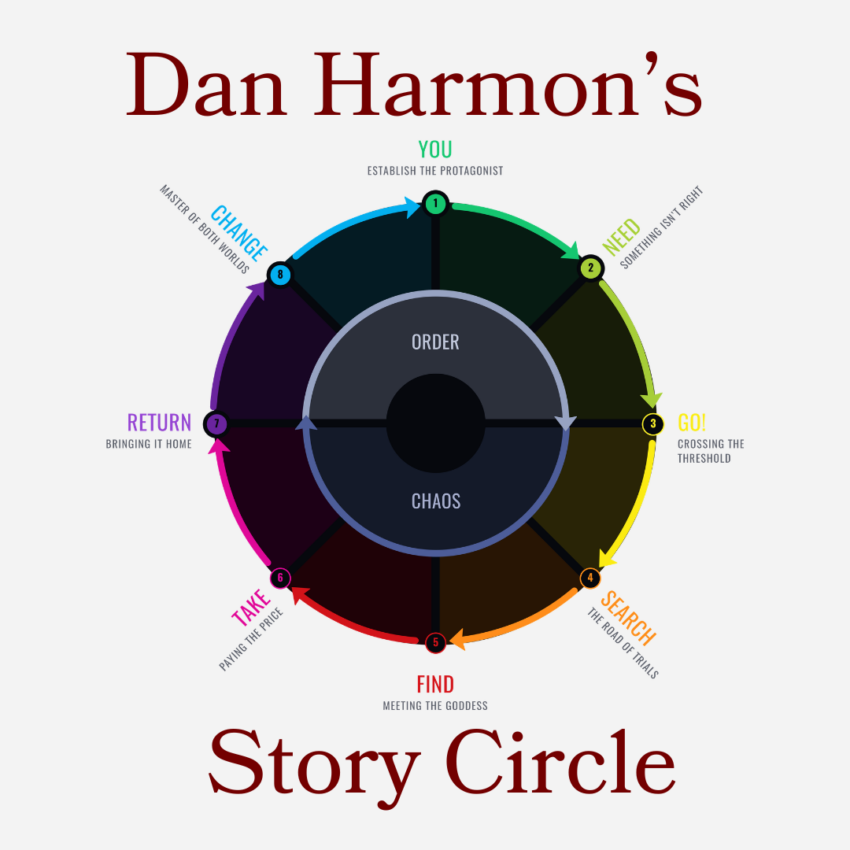
In my last post, we used the 60-minute plot method to build a 10-step map for Ava. We know she is a mechanic on a mission to recover a stolen locket, and we have the external milestones to get her there. But a perfect plot can still be a boring book.
If things are happening but the reader does not care, it is usually because the character is just a hollow shell being dragged from scene to scene. Layering Dan Harmon’s Story Circle over the map allows you to track the internal shifts that make the external action actually mean something.
1. You: The Comfort Zone
Start where it is safe. If we do not see the before picture, the transformation at the end means nothing. The Ava Example: She is safe in her shop. She trusts tools, not people. She is comfortable being a loner.
2. Need: The Inner Longing
Your character has an internal void they need to fill, even if they do not know it yet. The Ava Example: Ava tells herself she likes being isolated, but her independence is actually a cage. She needs to learn how to rely on others.
3. Go: Stepping into the Unknown
The hero leaves their ordinary world behind. The old rules no longer apply. The Ava Example: She leaves the shop and enters the high-stakes world of black market auctions and thieves.
4. Search: Navigating the New World
They are on the hunt but they are flailing. This is where they learn that their old tricks will not work here. The Ava Example: She tries to muscle through the investigation, but she is outsmarted. Her tough girl act is a liability in this environment.
5. Find: The Perceived Prize
This is the midpoint. The hero thinks they have won, but they have not actually grown yet. The Ava Example: She sneaks into the auction and grabs the locket. She thinks the mission is over.
6. Take: The Cost of the Prize
To get what they truly need, they have to give up a piece of who they used to be. There is always a price to pay. The Ava Example: The locket is a decoy. Security swarms. To survive, Ava has to ditch her beloved motorcycle to escape. She loses her bike and her pride at the same time.
7. Return: Heading Home, Changed
The hero starts the journey back to their normal world, but they are not the same person who left. The Ava Example: Stranded and humbled, Ava finally breaks her loner rule. She calls her sister for help. She is heading home, but she is no longer going it alone.
8. Change: The Transformation Revealed
Contrast this with Step 1. If the character has not evolved, the story has no point. The Ava Example: She is back at the shop, but she is not alone. Her sister is there working with her. She is still a mechanic, but she has stopped being an island.
Why use the Story Circle?
The 60-minute plot builds the road, but Dan Harmon’s Story Circle builds the driver. By linking the external plot to an internal fear, your story feels deep without you having to overthink it. It ensures that your action scenes are actually growth scenes.
Now that we have the external map and the internal heart, the final step is making sure all the moving parts work together. In the next post, we will put everything into a Plot Grid to manage subplots and keep the pacing tight.