The world’s current weight—the systemic cruelties sanctioned by government agencies, the deep-seated corruption unearthed in records like the Epstein files—is not a novel condition. It is the perennial shadow cast by concentrated power. But history offers us a clear, undeniable truth: when governments seek to suppress or erase, the practice of writing to resist is the first and most enduring counterforce. For millennia, from samizdat publications challenging Soviet tyranny to the powerful narratives exposing racial injustice, writing has always been a fundamental form of resistance against corrupt governments and social injustices. It is not merely a personal coping mechanism; it is a discipline forged on the historical front lines of resistance against oppression.
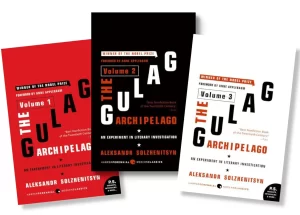
Think of Aleksandr Solzhenitsyn, whose Gulag Archipelago dismantled the Soviet myth by meticulously documenting the unseen horror of the state’s prison system, or Anna Akhmatova, whose poetry in the Stalinist era people memorized and whispered, becoming a vital, living archive of silenced grief.
In every era defined by tyranny, the act of putting pen to paper has been a subversive political act. We are living in a time when the powerful manipulate the narrative, twist the truth, and bury inconvenient facts. When I write, I am joining a historical lineage of dissidents and truth-tellers whose work alone survives the ruins of oppressive regimes, standing as a testament to human dignity and the democratic impulse.
1. The Writer as the Undocumented Witness
Official government narratives sanitize their actions. They turn human tragedy into cold policy and statistics. When writing to resist, we shatter that illusion, mirroring the work of countless anonymous scribes under repressive governments. These writers, through smuggled poems, private diaries, and uncensored accounts, documented what the state wished to make invisible. The diaries recovered from the Warsaw Ghetto, like those of Emmanuel Ringelblum’s Oyneg Shabbos archive, exemplify the power of the unofficial record and preserved the truth of Nazi atrocities against all odds.
- Transforming Abstraction into Evidence: We take the official language of detainment, deportation, or suppression and transform it into the visceral story of a human being. We must turn legal briefs into portraits of agony, and migration statistics into the interrupted lives of families.
- Building the True Archive: Oppressive power attempts to control the past to control the present. I refuse to let the government be the sole historian. Every personal essay, every piece of investigative reporting, every creative work contributes to the true archive—a moral and factual register that ensures the painful truths of our time survive against the inevitable attempts at historical revisionism.
2. Giving Voice to the Unspeakable Horrors
The exposure of systemic exploitation and high-level corruption is profoundly destabilizing. The initial reaction to revelations of deep, entrenched institutional evil—like those revealed in the Epstein files—is often shock, paralysis, or moral horror.
- Forging Outrage into a Weapon: Writing provides the structure to move beyond mere feeling. It is the process by which moral outrage is distilled, organized, and articulated into a coherent critique. It turns raw emotion into a tool for analysis and strategic action, echoing the pamphlets and manifestos of past revolutions. Thomas Paine’s Common Sense is the ultimate example, transforming abstract colonial grievances into a rallying cry for American independence.
- Connecting the Chains of Oppression: Our responsibility is to illuminate the hidden logic of power. We must connect disparate events, like the systemic cruelty, the suppressive policies, and the corruption thriving within institutional failure, to reveal the underlying, unified structure of oppression. The essay, the report, the poem all serve as tools to forge a coherent narrative from fragmented chaos.
3. Seeking Clarity as a Form of Resistance
Today’s digital environment is engineered for distraction, division, and the demolition of nuance. It is an ideal environment for authoritarian control. The government seeks to occupy and muddle the collective mind.
- The Discipline of Counter-Thought: Writing to resist is an active political discipline. It forces clarity, demands rigorous research, and requires a logical structure. It is the deliberate, slow-motion resistance against the soundbites and engineered outrage that serve the powerful.
- Building the Necessary Bridges: The purpose of political writing is not merely to preach to the choir, but to cut through the noise imposed by those in power and find common ground in shared foundational values: justice, truth, and human rights. The American Civil Rights Movement relied on writers like James Baldwin and Martin Luther King Jr., whose essays and letters, like “Letter from Birmingham Jail,” meticulously argued for justice. They created a moral and intellectual framework necessary for political change. Our words must translate the stark reality of the oppressed to the ears of the comfortable, fostering the empathy necessary to forge a collective front.
Writing to resist honors the countless writers, journalists, and poets who risked everything under oppressive regimes. It is a choice of engagement over apathy. It is a historical declaration that truth matters, that human dignity is non-negotiable, and that the story of our time belongs to those who choose to record the truth, not those who wish to obscure it.
Pick up your pen. Open your document. Your words, my words, our words are the essential breadcrumbs we leave not just for the future, but for the moral reckoning of the present. Always continue writing to resist.
To read my latest blog post, please click here or use the navigation menu in the sidebar.